
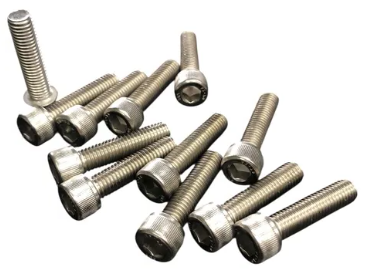
In the photovoltaic industry, structural durability is as critical as panel efficiency. The choice of fasteners is not a minor detail; it is the factor that ensures the system withstands decades of outdoor exposure. Below, we analyze why the combination of raw aluminum and stainless steel is the superior technical choice.
1. Prevention of Galvanic Corrosion
Aluminum and stainless steel have compatible electrochemical potentials, reducing the risk of galvanic coupling compared to carbon or galvanized steel. Stainless steel develops a passive chromium oxide layer that minimizes electrolytic reactions, protecting the integrity of the aluminum profiles.
2. Mechanical Strength and Fatigue
Solar structures are subjected to dynamic loads such as wind gusts and thermal expansion. Stainless steel maintains its toughness under extreme temperature changes, and its relative elasticity allows the joint to withstand aluminum’s expansion cycles without losing torque or fracturing.
3. Aesthetics and Zero Maintenance
Unlike zinc-plated screws, stainless steel does not produce “brown rust streaks” that permanently stain aluminum profiles. This ensures a visually flawless installation and eliminates the need for coatings or inspections due to material degradation.
4. Material Comparison
While galvanized steel relies on a sacrificial zinc layer that depletes over time (especially in humid environments), stainless steel is intrinsically resistant throughout its mass, guaranteeing a lifespan exceeding the 25 to 30 years required in solar projects.
5. Grade Selection: A2 (304) vs. A4 (316)
Location is key:
- Grade A2 (304): Ideal for standard rural or urban environments.
- Grade A4 (316): “Marine grade.” It contains molybdenum to resist chlorides. It is mandatory for installations within 5 km of the coast or in aggressive industrial areas.
6. Managing “Galling” or Seizing
Stainless steel is prone to galling (cold welding due to friction). To prevent it:
- Use nickel or ceramic-based anti-seize lubricants (never copper-based, which reacts with aluminum).
- Avoid high-RPM impact tools.
- Keep threads free of sand or dust.
7. Synergy Summary
The combination of aluminum (lightweight and natural resistance) with stainless steel (strength and chemical passivity) creates an eternally structural system. It also facilitates future maintenance, allowing bolts to be loosened decades later without being welded shut by corrosion.
8. Cost-Benefit Analysis
Although stainless steel fasteners may cost 2 to 3 times more than galvanized ones, their impact on the total project budget is usually less than 1%. This minimal initial investment saves 100% of long-term structural replacement costs and corrosion-related failures.